⦿ peak shaving
⦿ bess
Peak Shaving: How BESS Can Reduce Peak Demand Costs
Marina S.
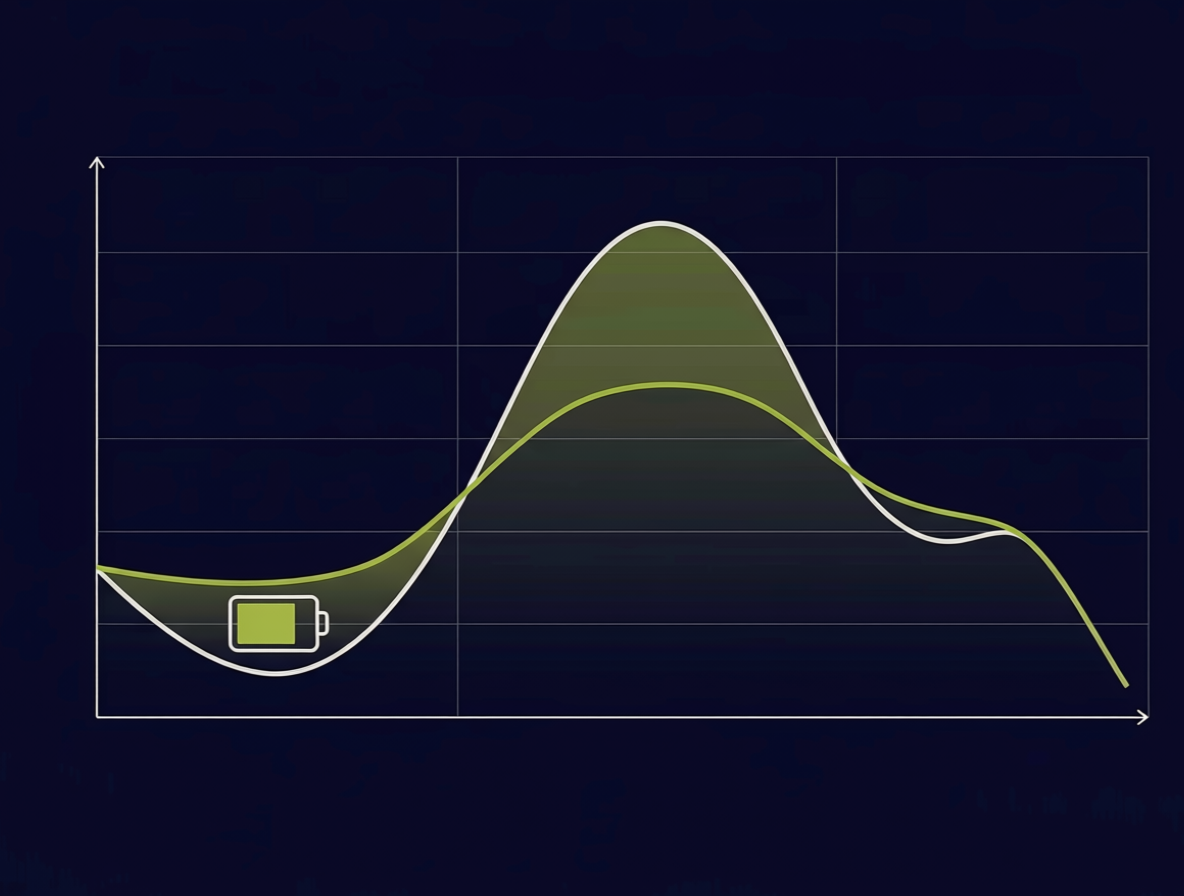
For many industrial companies, electricity costs depend not only on how much energy they consume, but also on the highest power demand their facility draws from the grid during a given period.
This short-term spike in consumption is known as peak demand or peak load. It can occur when large consumers such as compressors, electric motors, furnaces, or production lines start operating at the same time. Even a brief spike can affect the costs a company pays throughout the billing period.
Peak shaving is a strategy that reduces these demand peaks using a Battery Energy Storage System (BESS). Instead of drawing the entire required load from the grid, the battery supplies part of the power during critical periods.
The result is lower peak demand, optimized electricity costs, and more stable energy management for industrial facilities.
Peak shaving means reducing short periods when a facility requires the highest amount of power from the grid.
Industrial facilities often have uneven consumption profiles. For most of the day, demand may remain relatively stable, but sudden increases can occur when equipment starts up or several production processes operate simultaneously.
Without an energy management system, the grid must supply the full required power during these periods. These short demand peaks can significantly increase energy costs.
Peak shaving allows part of this load to be shifted from the grid to a battery energy storage system.
A BESS continuously monitors the facility’s energy consumption through an Energy Management System (EMS).
When demand reaches a predefined threshold, the system automatically responds:
The battery begins supplying power to the facility.
Part of the load is no longer supplied by the grid.
The maximum power demand recorded by the grid remains lower.
The entire process happens automatically within seconds, without employee intervention and without interrupting production.
Once the high-demand period has passed, the battery recharges and prepares for the next peak.
Unlike one-time cost optimization measures, peak shaving provides a continuous effect.
Every month with lower peak demand can mean:
Lower costs associated with peak consumption
More predictable electricity costs
Greater control over energy expenditure
For some industrial facilities, another potential benefit is reducing the need to increase grid connection capacity.
Companies planning to expand production often face the question of whether additional investment in grid infrastructure will be required. In these situations, industrial BESS solutions can provide additional capacity without immediately increasing the grid connection, as the battery can handle short-term increases in demand.
Peak shaving is particularly valuable for industrial consumers with large, short-term spikes in electricity demand.
Typical examples include:
Metal processing facilities
Manufacturing plants with large electric motors
Cold storage facilities
Logistics centers
EV charging stations
Facilities using compressors and other high-power equipment
For these users, BESS can be one of the fastest ways to optimize energy costs because it addresses the problem exactly where it occurs — during periods of highest demand.
Combining a solar power plant with a BESS can further improve the facility’s energy efficiency.
While solar panels generate electricity during the day, battery storage allows that energy to be used when it is actually needed and can further reduce dependence on the grid.
Solar generation typically peaks during daylight hours, while industrial consumption may follow a different profile. A BESS can store surplus solar energy for later use while also helping reduce demand peaks.
This allows companies to optimize not only the cost of electricity, but also gain greater control over their overall energy system.
Every industrial facility has a different energy consumption profile. That’s why peak shaving potential cannot be determined from annual electricity consumption alone.
A proper assessment should consider:
15-minute load profiles
Periods of highest demand
Electricity tariff structure
Planned production growth
Based on this data, the appropriate BESS system can be sized and the realistic savings potential can be estimated.
No. A BESS can reduce peak demand and optimize electricity costs independently, even without on-site renewable generation.
Savings depend on the facility’s consumption profile, tariff structure, and BESS size. For industrial consumers, peak shaving can represent a significant part of the overall value created by a BESS investment.
No. The system operates automatically in the background and adjusts power delivery according to the facility’s real-time energy requirements.
Peak shaving is not a one-size-fits-all solution. The real value of a BESS becomes clear only after analyzing actual consumption data and the facility’s energy profile.
AESYS analyzes your facility’s energy data to determine the potential for reducing peak demand, optimizing energy costs, and correctly sizing the BESS for your specific application.
Request a Free Energy Analysis ➤
Savings estimates depend on the consumption profile, tariff structure, and market conditions.